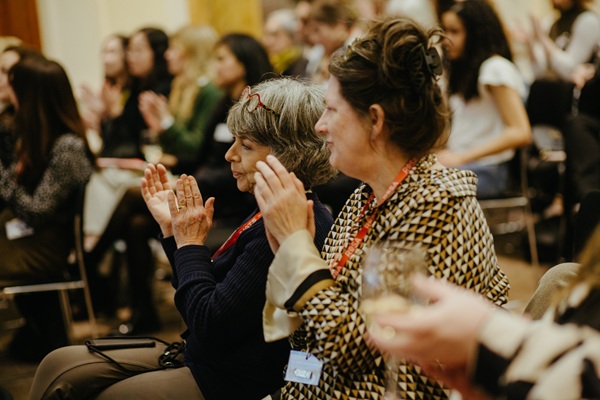
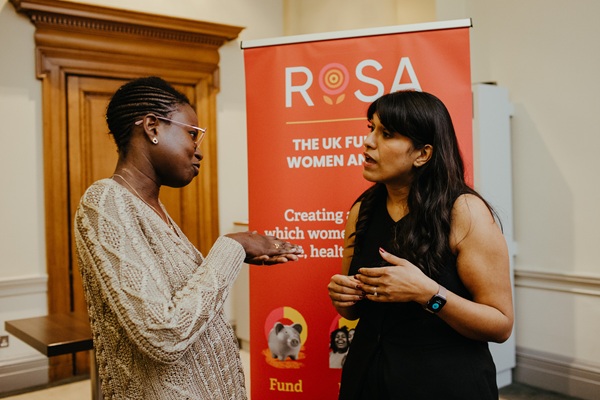
Rosa’s Women driving change: advancing equality and racial justice event brought together Rosa’s funders and supporters with activists and practitioners to hear firsthand how women-led organisations are responding to the intersecting challenges faced by Black and racially minoritised women and girls.
A sector under pressure
Opening the evening, Rosa’s Chief Executive, Rebecca Gill, welcomed attendees and underscored the vital role of women-led organisations in driving social change.
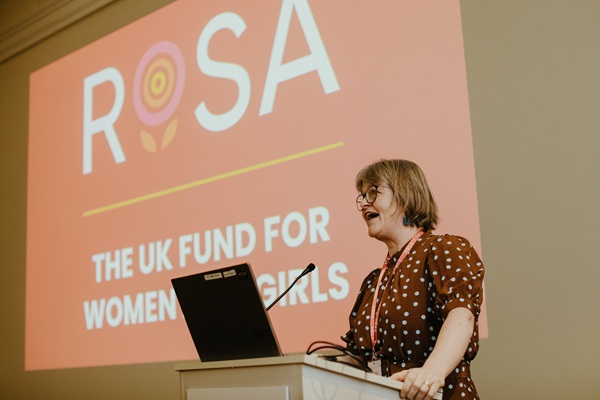
She highlighted stark funding inequalities, noting that Rosa’s own research shows that just 1.8% of all charitable grants go to women-led organisations—and even less reaches those led by Black and racially minoritised women. Against a backdrop of rising racism, Islamophobia and antisemitism, she warned that many of these organisations are being pushed to the brink, despite being “lifelines” for the communities they serve.
“These organisations provide connection, specialist support and advocacy, while also challenging the systems that harm women and girls.”
“It’s not individual failure—it’s systemic”
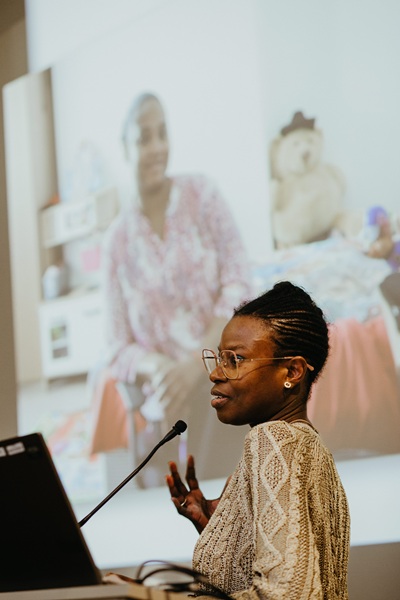
Faty Kane of The Angelou Centre, shared insights from frontline work supporting survivors of domestic abuse.
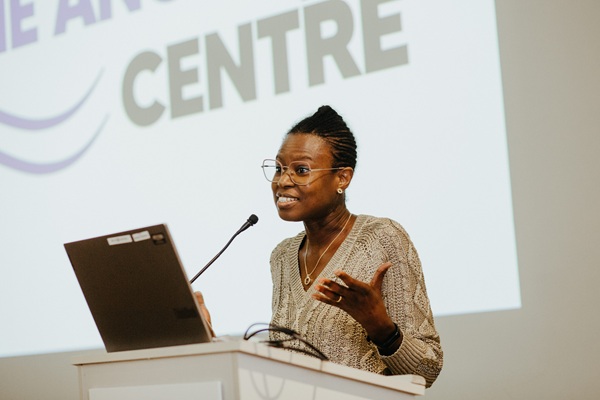
Drawing on a case study of a migrant woman who rebuilt her life after facing deportation and family separation, Faty demonstrated the transformative impact of sustained, specialist support. But she also pointed to systemic failures.
“When the same patterns happen again and again—and it’s always Black and migrant women—it stops looking like individual mistakes and starts looking like system failure.”
Faty also presented findings from the Centre’s report Why Do I Have to Hide Away?, documenting the experiences of women during racist riots in 2024. The report revealed deep, lasting fear among communities, with some women too afraid to leave their homes.
Crucially, she highlighted how women’s voices are often excluded from official responses, with male ‘community leaders’ frequently dominating decision-making spaces. Her call to action was clear: sustained, flexible funding and stronger inclusion of women-led organisations are essential to building safer communities.
When you invest in women-led organisations, you are not simply investing in a project, you are investing in strengthening an entire ecosystem of safety and resilience and solidarity.
Breaking barriers to opportunity
Esther Sterngold of Goldstar Creative Marketing offered a deeply personal reflection on the barriers faced by Orthodox Jewish women entering the workforce.
From cultural misunderstandings to rising antisemitism, Esther described how “invisible barriers” can erode confidence and limit opportunity. Her organisation addresses this through tailored employability programmes and mentoring, helping women gain skills while staying true to their identity.
“Sometimes a woman simply needs someone to believe in her. Because when we empower women to walk forward with confidence, we don’t just change individual lives; we change entire communities”
Over the past year alone, Goldstar has supported around 850 young women, many of whom have gone on to secure employment and build long-term careers.
Survivor-led change
The final speaker, Natasha Rattu of Karma Nirvana, delivered a powerful account of the origins and impact of her organisation.
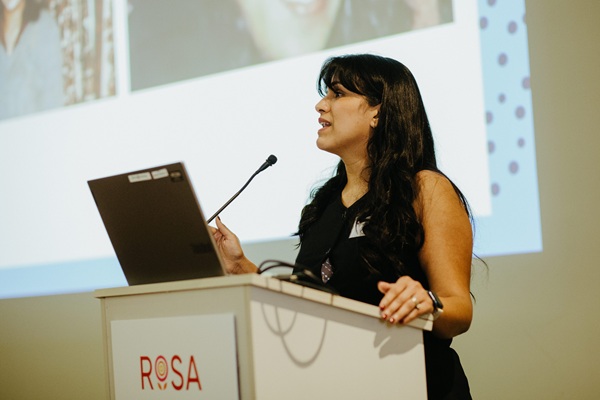
Founded by her mother, Jasvinder Sanghera, Karma Nirvana emerged from lived experience of forced marriage and family estrangement. Today, it runs the UK’s national helpline for honour-based abuse and plays a leading role in shaping policy.
Natasha emphasised that honour-based abuse remains one of the most hidden and least understood forms of violence against women and girls. Through survivor-led advocacy, the organisation has been instrumental in pushing for a legal definition of the abuse—an important step toward better protection and accountability.
“This is about power and control. It’s a system where someone’s choices, their freedom, their future are tightly controlled, and failing to comply can put them at risk. And so this is why Karma Nirvana exists. We exist to make sure that victims are seen and heard, to make sure that the abuse that we’re talking about is recognised and tackled.”
Investing in women, investing in change
Closing the event, Rebecca reflected on the common thread running through all three contributions: the transformative power of investing in women-led organisations.
From grassroots support services to national policy change, the speakers demonstrated how these organisations are not only responding to immediate crises but also reshaping systems for the future. Rosa, which has directed 65% of its funding to Black and racially minoritised women-led organisations, continues to call for greater investment across the sector.
“These examples are just three among many that show the profound value of investing in women-led women’s and girls’ organisations, and the importance of having Black and racially minoritised women-led organisations to do that important work.”